Low, Slow, and Personal: Dave Pynt Turns the Page
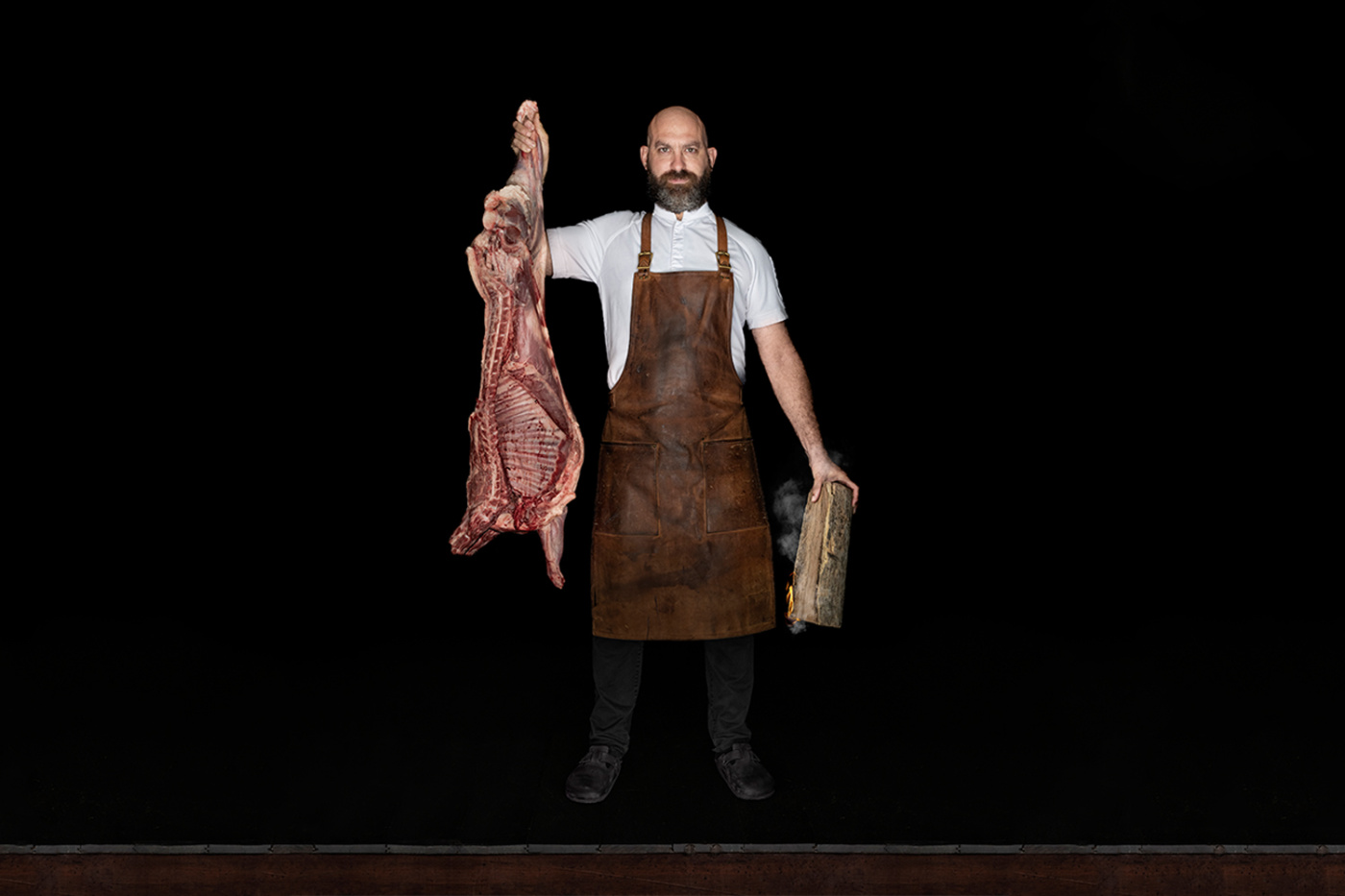
He’s done the brisket. Now comes the book.
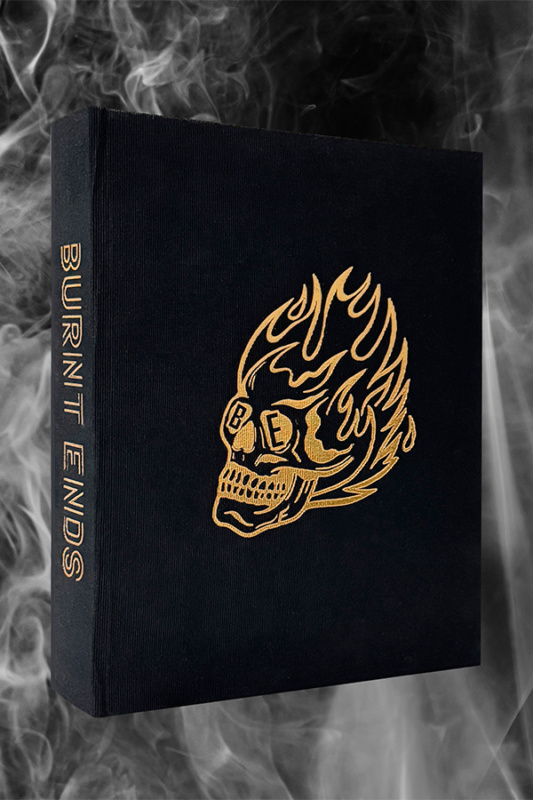
Singapore’s most formidable voice in the arcane art of pyrotechnic cuisine, that is, the nuanced science of cooking with open flame, has charted an unexpectedly elegant course. At the helm of the Burnt Ends Hospitality Group, chef-owner Dave Pynt is not only weathering the seas off the Maldives (at Waldorf Astoria) but orchestrating a 12th-anniversary celebration worthy of his fire-forged legacy: a series of kitchen takeovers featuring four of his most cherished culinary co-conspirators. Not long ago, the sailor-tongued maestro delivered an unexpectedly candid, first-person account of his odyssey—from smoke-swathed concept, to fleeting pop-up, to the final anchorage at Dempsey Hill, where one-Michelin-star Burnt Ends now smolders with purpose. The Burnt Ends book is 368 pages long and fastidiously highlights the advantages of cooking over wood fire without being didactic. All of which prompts a surreal question: Is Dave better at teaching than he is at running a tight ship?
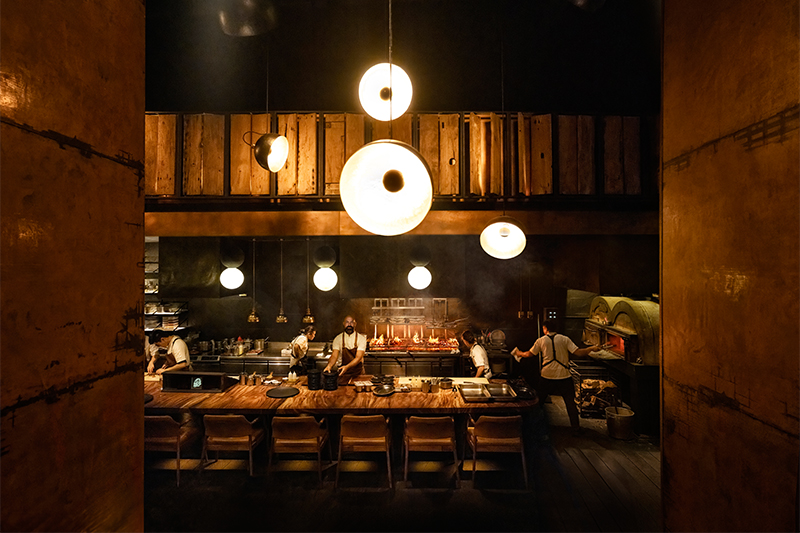
It’s 10 p.m. in Singapore, 4 p.m. CET, and I’m dialing into a Google Meet with Dave. True to form, he appears after a few rings, slouched comfortably in a worn brown leather chair, framed by the moody panelling of the dining room. Behind him, the open kitchen hums with the kinetic energy of clattering pans and full bellies. You can almost feel the residual heat from the three-tonne oven just out of frame. He wipes a bead of sweat from his brow, throws a sideways glance at a staff member, then turns to the screen and asks, offhandedly, “How’s the little bub doing?”
We discuss wood, labour laws, his book, and the rare delight of not having to write it. Dave, it turns out, is as straightforward as a stalk of celery. “Thank goodness I didn’t have to write the book,” he says, eyes steady, giving full credit to his long-suffering editorial team—Max Veenhuyzen, Lotta Jörgensen, and Kristen Foster—who managed to extract complete thoughts from him. “They’d ask, ‘Tell us more about the eggplant and miso dish,’ and I’d say, ‘Erm, it’s eggplant and miso.’” Delivered deadpan, of course.
But before you judge the book by its lavish photographs and thick, coffee-table credentials, know this: it was two years in the making. A bruising, all-consuming process. The result is both a tactile tribute to the restaurant’s furnace-forged ethos and a masterclass in modern fire-cooking—16 techniques, 70 recipes, and an unfiltered look at life behind the pass. It belongs equally beside your hearth or your grill, or even nestled between a Phaidon monograph and a candle that smells faintly of bergamot and smoke.
High Net Worth: At this point in your career, what made you want to write a book?
Dave Pynt: It was a bit of ‘if not now, then when?’ I felt that after 10 years, we might have something to say that was interesting to our guests and other chefs. We were asked frequently about our story: “Can we get this recipe?” and “How do you do this?” It felt like a growing need, and at some point, I thought maybe we should go ahead and do it.
Who was your intended audience when you first began writing?
100 per cent, the guests at Burnt Ends. People who are interested in what we do. People from all around the world who might not be able to come to the restaurant. Though they may be miles away, this book lets us bring the Burnt Ends experience to them. I also wrote it for young chefs, hoping to inspire and offer a glimpse into what it truly means to be a chef.
How long did you spend working on the book?
It took two years.
So, which is harder—cooking or writing?
Luckily, I didn’t have to write the book. But I must admit that the process of creating the book was very, very challenging. I definitely underestimated how much effort it was going to take. It’s a lot of content, and since you’re well aware that I’m not the most articulate person on the planet, I think Max, Lotta, and Kristen had a relatively hard time getting it out of me.
What is the basic setup a home cook should have to tackle some of the recipes in your book?
A wood-fired BBQ, salt, good produce, some tongs, time, and a bottle of wine.
Have you had any positive feedback yet from book readers who have attempted the recipes?
Before we published the book, we were seeing really bad and poor attempts at the recipes. Now that the book is out, we’re seeing much better attempts—‘Shit, that looks pretty good.’
In the book, you touched on nurturing kitchen staff to become better chefs, possibly even better than yourself. Can you tell me about some of the alumni who have passed through the Burnt Ends kitchen and the businesses they now run?
Some of the notable ones include Jeffe Claudio, who has recently opened a place called Stoke in Berlin. Jake Kellie has opened Arkhé in Adelaide, and he is doing well there. Keirin Buck operates two restaurants in Singapore: Le Bon Funk. Gwyneth Ang has opened a prawn noodle shop and is now running a semi-fine dining establishment in New Bahru. Additionally, Jordan Keao manages Butcher’s Block at Raffles Hotel. I try to visit all of them.
Is there another book in the works, or is this the curtain call for publishing?
F**k no! After two years of tremendous hard work and effort, we are incredibly proud of this book. Perhaps at some point, if we feel we have enough to share, we might reconsider, but for now, it’s a definite no.
It’s incredible to think that you opened Burnt Ends in 2013! In such a fickle food scene as Singapore, it’s quite unusual for a restaurant to be so enduring. What factors do you think contribute to your long-term success?
Look, I think we have an amazing team. We’ve got a pretty unique style of food—really good produce cooked over wood fire. And as you know, when we first started, it wasn’t a thing. Our service is super casual, friendly, but professional. The idea is you can come in and have a good time. The menu is à la carte, and it’s very flexible. We always throw fun parties and collaborate with other chefs, which gives our guests a reason to come back, even if it’s not just for us.
I understand that the Burnt Ends brand has expanded to include an Australian barbecue in the Maldives, Meatsmith in Jakarta, a bakery, a hidden speakeasy, and more in the works. It’s a massive undertaking. How do you juggle it all? Do you delegate certain periods to certain projects, etc.?
Most of my time, maybe 95 per cent of my time, is spent at the mothership, Burnt Ends. This year, we hired seven new staff, the most in a long time. And with that comes knowledge, skill, and trust. We empower them to work on new and different projects, and that’s exciting.
Describe a regular day at work for you.
It starts at home. 6:30 a.m. with the kids, helping to bundle them off to school. In between, I might fit in some exercise and a cup of coffee. By 8:30 a.m., I’m checking emails, reviewing any night reports that I may have missed, and generally getting on top of things. By 10 a.m., I’m at work, walking around to see what’s happening, touching base with the office, reservations, and the different teams. Service starts at 12 p.m. and runs until about 3 p.m. Then, I take a little break to get some work done. Dinner begins at 5:30 p.m. and wraps around 12:30 to 1 a.m. It’s a long day; I wish there were more hours.
I’ve been meaning to ask this because my partner and I own a restaurant in the French countryside, and we have a toddler and another kid on the way. How do you cope with the ins and outs of business and family life?
It’s a constant juggling act of push and pull between all these avenues. Trying to make sure everyone is happy, even if no one is happy the whole time. To do anything good, you’ve got to work hard. Get rid of the dinners, the long lunches, and the bar crawls after work, and dedicate that time to either work or family. In doing so, you become much more effective and efficient.
You’ve been passionate about cooking with fire throughout your career. Have you ever felt the need to explore other projects in different styles?
No. I have no interest, despite the proposals that have come in. I’ve just acquired a Francis Mallmann grill, bought a 500-gallon offset smoker from Texas, and a spit rotisserie. Currently, I’m exploring various equipment, techniques, and styles that can be used for BBQ, rather than just focusing on what we currently do. Can’t afford to rest on our laurels!
Do you intend to go somewhere else to continue learning?
I’m always curious. Some of the trips I would love to embark on are to Texas and Carolina to witness American BBQ in action. I would also love to travel South to spend time with Francis Mallmann and see what he is up to in Patagonia. However, I’m not sure when I will have the time to do so.
How do you keep your team motivated?
By constantly pushing them to do better, checking in on them, and asking, ‘What’s next? What’s new?’ Sometimes I buy new toys, like the smoker and the grill, to challenge the chefs to work outside their comfort zone. No matter what, I never let our standards slip, and as different opportunities present themselves, we try to take them as well.
Let’s talk about your wood inventory—where does it come from? How do you store it, and how much do you use in a day?
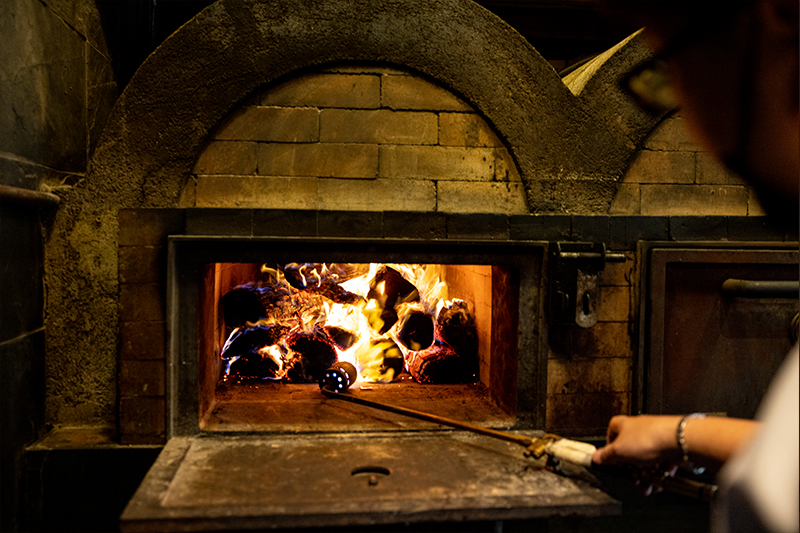
Let’s be clear: importing is not my expertise, so I try to stay out of it. In the early days, we partnered with a local wood importer who had a large yard and a substantial team to manage that aspect of the process. We enjoyed a comfortable arrangement with our supplier for 6 to 7 years, until suddenly the Western Australian government decided to cut us off. ‘No more Jarrah,’ they announced. Consequently, we had to seek help from the East Coast. Currently, all our wood comes from Queensland. We use a hardwood called ironbark, which we ship in 40-foot containers and consume about a tonne each week. At present, we store approximately 500-600 kg in the restaurant; we receive deliveries daily, except on Sundays.
Why ironbark?
Ironbark is a very dense and hard wood. It burns hot for a very long time and produces very clean smoke that is also very sweet. Recently, we’ve tried lychee wood and apple wood, which you can get regionally, but the quality is inferior. It is not dense or dry enough, and sometimes it ends up being very green, producing lots of smoke in its wake.
A tonne of wood a week? Whoa. Out of curiosity, what percentage of the total cost is attributable to the wood alone?
It’s quite negligible. Our power costs are significantly higher than our wood expenses. Over the last two years, electricity prices in Singapore have surged, almost doubling in cost.
As far as I know, there’s no legal framework for employing stagiaires in Singapore. Do you accept them regardless?
We can’t take them. It is not allowed. It’s a shame because I’ve staged extensively throughout my career, and I can credit much of my success today to the experience I gained working in other people’s kitchens. Unfortunately, Singapore doesn’t allow it. We’ve received quite a number of requests, and it is upsetting that we cannot accept them. It is what it is…
Having lived in Sydney as a young pastry chef, I was struck by the city’s rich culinary mix. Did growing up in Perth influence how you think about food?
What you see in Perth is a melting pot of different cultures, and the food is very non-traditional. It has an Australian twist, whichever way that manifests. Growing up in that environment breaks down many barriers, such as “you can’t do this, you can’t do that, this is how it’s meant to be…” I do not have a reduced affect display towards food creativity out of disrespect for tradition. Honestly, it’s quite liberating.
What’s your favourite food memory from your youth?
Definitely barbecues. My dad used to rip out all the gas BBQs from the houses we moved into and build a wood fire. He loved doing that.
How often do you visit Perth with your family, and what are some of your favourite haunts?
For a while, I didn’t travel back so much, but with the kids growing older, it’s prime time to visit with them in tow. Last year, I went back five times! One thing that I always look forward to is Christmas in Perth. It’s hot, there’s champagne on the beach; swimming, surfing, barbecues—just epic, I love it.
If you could wave a magic wand, what would you change about the restaurant industry?
The ridiculous labour laws. I need to stay on the right side of the law. I don’t think it should be so strictly controlled or so regimented. They force nurses in hospitals to work 16-18 hours a day, but dare to do that to a chef? No way. It all boils down to productivity. For example, do you ever tell an athlete to stop training? Never. From the minute they wake up, they are focused. So, if a chef wants to excel at what they do, why should the government be putting obstacles in the way? I don’t agree with taking advantage of people, but if they want to improve themselves, should we not support that as well?
Victor Arguinzoniz has been a major source of inspiration for you. Do you have any other food heroes or chefs you admire at the moment?
Anyone doing things at the top of their game is always an inspiration. No two chefs are ever truly the same—there’s always something to learn, observe, or be inspired by in someone else’s craft. That’s the most amazing thing about our industry. We do a chef series and invite chefs over to cook with us. This year, we have had Ray and Eelke from Locavore NXT in May, and soon we’ll welcome Mohamad Orfali from Dubai to cook. These chefs have such different takes on cooking styles, and it’s very inspiring to see what they do up close.
Money, responsibilities, creative freedom, and accountability to investors—how did you find your sweet spot with Burnt Ends over the last 12 years?
I’m very lucky to have pretty amazing partners. I always try to do the responsible thing. It’s never about putting money in my pocket, and there’s always logic behind my actions. For example, when they see me splurge on building the restaurant in Dempsey or buying that $25,000 smoker from Texas, I always try to make my decisions viable. Sometimes, I might not know how yet, but I’ll figure it out.
I believe that running a restaurant as a profitable business may involve compromises. At the end of the day, we are also responsible to our guests. It’s simple: if they aren’t having a good time, they just won’t come back. The real challenge is balancing the demands of business and the spirit of hospitality. Often, these two aspects don’t go hand in hand. Hospitality is about generosity, giving, and fun, whereas business is about dollars and cents.
When we first opened, we only offered dinner, but Peng passive-aggressively suggested that lunches would be good for the business, so we commenced five lunch services a week. Sure, we made money, but it was exhausting for the team and hard on the equipment, so we had to cut back. After coming out of the pandemic, we made an educated guess on our opening hours, and now the bar opens five nights, while the restaurant serves five dinners and only three lunches. The question any business owner should ask themselves when deciding whether to extend operating hours is: Are the guests going to be happy? Is the business going to make money? If the answer is maybe, then it’s probably not worth it. Ultimately, people will learn. Opening at specific hours focuses customer flow, making your working hours more efficient and productive.
As part of their 12th anniversary celebration, Burnt Ends plays host to a bunch of celebrity chefs from around the world. The kitchen takeover lineup includes Mohamad Orfali of Orfali Bros Bistro on 4th August, Prateek Sadhu of Naar on 25th August, and Jessica Rosval of Al Gatto Verde on 8th December. Reservations are strongly recommended. The Burnt Ends book is available for sale on their website.